Wednesday, September 27, 2023
Let Justice Ring: Blessed Are You, Or Maybe Cursed, Revised
Let Justice Ring: Blessed Are You, Or Maybe Cursed, Revised: Blessed are you who protest against injustice For great is your reward in heaven, But here on earth, great is your mistreatment. Ble...

Let Justice Ring: Blessed Are You, Or Maybe Cursed, Revised
Let Justice Ring: Blessed Are You, Or Maybe Cursed, Revised: Blessed are you who protest against injustice For great is your reward in heaven, But here on earth, great is your mistreatment. Ble...
Let Justice Ring: Blessed Are You, Or Maybe Cursed
Let Justice Ring: Blessed Are You, Or Maybe Cursed: Blessed are you who protest against injustice For great is your reward in heaven, But here on earth, great is your mistreatment. B...
Monday, September 25, 2023
Let Justice Ring: The Parable of the Soils of Justice
Let Justice Ring: The Parable of the Soils of Justice: And again, the speaker stood up on the podium and behind the microphone, and his words burst forth in a voice unlike any had heard. He spo...
Monday, September 4, 2023
Baseball and Maintaining the Racial Status Quo in the '40s and '50s
 In John Klima's book, "Willie's Boys: The 1948 Birmingham Black Barons, the Last Negro League World Series, and the Making of a Baseball Legend," the author does a good job of chronicling the origins, successes, and ultimately the demise of the Negro Leagues. Successes of Black ball players being signed by Major League clubs, without any compensation, by the way, ultimately led to the Black ball player system shutting down. It would come much later, up into the 1960s, but during the late '40s, it was "on the ropes," to use a boxing metaphor. The dominant subtext of the book is the making of Willie Mays, HOFer, from the hills of Alabama to the fields of the Negro Leagues, even as a high school kid. Apparently, everyone knew that he would get out of "the box," a term Black ball players used, and make it to the bigs.
Here is a curious quote that reminds me of what I've heard overtly and covertly over the years of interviewing and advocating for Black farmers. See if you see the parallels:
"Yet deceit abounded on both sides. Black players felt they were better than ordinary players. They thought they weren't getting a fair look. Every full-time major league scout in 1948 was white and the majority of them were former major league ballplayers, which meant they were white southerners. The old battle lines of the South were drawn again. The right to determine the value of property and who it belonged to, the right of one man to choose the fate of another, and the belief inherent in generations of white southerners that black southerners were there to serve them, and if not, to be ignored, permeated the players and the scouts." --- page 143.
The "planter class" mindset was ruling major league baseball. If you owned a plantation and had 15 or more enslaved persons, you fell into this class, and you were a millionaire. Check out "Marse: A Psychological Portrait of the Southern Slave Master and His Legacy of White Supremacy," a heavy read by Dr. De. Kirkpatrick. The white owners of the major league clubs, and sometimes even clubs in the Negro Leagues, were comparable to the plantation owners. The scouts were supposed to keep the owners' clubs white. All of that broke with Jackie Robinson, but there is more to the story including stories of those clubs that feigned interest in Black ball players, such as the Boston Red Sox or the New York Yankess, but they were really not interested. It was sort of ok to have Black players in the minor leagues, but not up with the bigs.
Willie made it out. His team and coaches helped him out. We know the rest of the story.
Monday, August 28, 2023
Jesus, the Others, and Us Then and Now
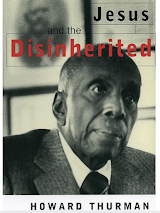
Thurman's life was deep and rich. The grandson of formerly enslaved people, he wrote prolifically and traveled extensively and shaped generations of people including lay people and ministers. His videos are available over on youtube for people like me who are relatively uninformed. There is even a movie about the man.
Most compelling for me is how Thurman describes Jesus of Nazareth in this small volume, how Jesus navigated the perils on the left, the conservative Jewish leaders of the day and their fear of Him upsetting the proverbial apple cart of their faith traditions and their intentions to kill Him, and on the right, the Roman government that was undoubtedly aware of any potential uprising from this religious sect in Galilee.
As Jesus navigated the perils of His day, He reached out and touched and engaged and loved those who were "disinherited" of His day. As a Black man in America, Thurman knew what it was like to live in a land where he and his people were disinherited. Jesus connected with the poor, the prostitutes, sinners, tax collectors, those who were demon possessed, avoided as unclean, the blind, the disabled since birth, women, and others whom society deemed unworthy. He even had a surprising conversation with a woman at a well in the middle of the day when no one else was around. Shameful!
Just the other day, my wife and I had a rich conversation about our church, and who we think are the "disinherited" of our day, and how they are noted in public assemblies. Our church and our denomination are not the only ones who do this. No, many, many do the same.
Who do you think are the "disinherited" of our times? Immigrants, Muslims, people who experience same sex attraction, non-binary individuals, gay couples, people who walk in Gay Pride events, people categorized as LGBTQ, and any number of other people. If we listened closely enough, we can still hear racial slurs toward Hispanic people or Black people or any number of other groups. Watch the news for a couple of hours and there are the perpetrators of violence upon the "disinherited" of our day.
What we do publicly is to declare where we stand. We make declarations both overtly and covertly in public places and spaces, declaring these others as others. Thus, we "otherize" some of God's children who do not walk, talk, live, believe, look, and think like we do. Implicitly, I think, we glorify ourselves as ones who can do the "otherizing" as we point out the "others." We are insulting the "disinherited" of our day. Why would we want to insult someone for whom Christ also died?
This dynamic is very similar to what religious people did when Jesus walked the earth. They "othered" Him as he hung out with "others" such as tax collectors and sinners and any number of other people who found Him and His message compelling. Their list was long.
The irony is that in some of our assemblies we "otherize" people or groups of people and then expect ourselves to have a voice with them. People who are "othered" will not attend our assemblies, or if they do, they will not come for long once they have heard the language. They, I think, will avoid conversations with us.
So, bottom line, Jesus engaged those who were disinherited. I want to live the way Jesus lived. I devote much of my time and energies to fighting for justice for Black farmers. They, Black farmers of our land, are "otherized" by institutions of power and privilege. They get their loans late and less than what they qualify for, they lose their farms and homes when the banks and the local county offices have been working deals behind their backs, they receive loans less frequently and in fewer dollars than do white farmers, and I could go on and on, but you get the drift.
I was once a young person who easily could have been labeled one of the "disinherited" kids of the day: poor, growing up in a single parent family, mother addicted to prescription drugs, a parent who was admitted on two occasions to a mental institution, lived on commodities, received hand me down clothes from well meaning people at church. It was terribly uncomfortable.
Now is not a time to insult people for whom Christ also died. There is no need to use the pulpit as a time and place to label people. Now is not the time to draw distinctions between who "deserves" loans and services for farming, and those who do not, at least based upon the color of their skin. Now is the time and this is the place to engage people in their life journeys. Now is the time to treat people with dignity and respect whether in our churches, our offices, our neighborhoods, our restaurants, or wherever.
Now is not the time to craft smaller tables. Now is the time to build bigger tables. Now is the time open the doors and invite all in to sit with us. Better yet, get to know people on their own turf. Develop respectful relationships with others. It's hard to talk smack about someone you love.
Excuse me, but I'm going to go and hang out with Jesus of Nazareth and Dr. Howard Thurman for a while today.
Monday, August 14, 2023
Dear President Biden: Your Administration Continues to Betray Black Farmers
This letter to President Biden further explains the letter to the congressionals in Texas in the letter found below.
January 19, 2023
President Joe
Biden
The White House
1600 Pennsylvania
Avenue
Washington, DC
Dear Mr. President:
Your administration continues to betray Black farmers.
We have written to you about this betrayal and our concerns on several occasions including: September 28, 2022 and December 8, 2022. And, we have written to Secretary Vilsack on several occasions including: November 22, 2021 and July 23, 2021, and even to the House and Senate Ag Committees on May 29, 2022. Our concerns, then, have been articulated on multiple occasions. We have not been working in the dark, but rather in the light of day.
Secretary Tom Vilsack, your appointee at USDA has deep ties to the dairy industry in which he worked between terms with President Obama and then with you. That relationship has resulted in millions of dollars being doled out to “Big Dairy.” The same could be said for “Big Farming.”
At the same time, he has not delivered on congressional allocations found in the act that you signed, The Inflation Reduction Act of 2022 (IRA), just as he did under the American Rescue Plan Act of 2021 (ARPA). The $3.1B for “distressed” farmers has not found its way into the hands of Black farmers. Our network which is nationwide has found only seven Black farmers who have experienced any sort of “payments” under this Bill. We know that 2,400+ Black farmers owe approximately $210M, and Secretary Vilsack has not paid off their debts as contained in the Bill. Why is that, Mr. President?
The IRA of 2022 also promised $2.2B for those farmers and ranchers who had experienced discrimination. One or more non-governmental entities were to be tasked with distributing those funds. Again, without a doubt most Black farmers would qualify, especially the Pigford Legacy Farmers. Again, Secretary Vilsack has not acted within an expeditious manner toward Black farmers. Will he indeed run out the clock, endangering that funding with the next administration?
We understand that $800M has been received by 13,000 distressed farmers, that they have been brought current on their financial obligations and that an additional payment was made and that they are to take up their own payments the following year. We ask the USDA, “where are the other Black farmers,” and “when will the other Black farmers receive their due?” And we are not given any answers.
We also understand that Secretary Vilsack will reduce funding for discrimination from $2.2B to $770M. If this is true, this is indeed an act of arrogance on his part.
We are troubled that he continues to fund white farmer programs, create MOUs with entities such as the National Urban League, which has little to nothing to do with farming, and yet he is not forthcoming about efforts with Black farmers.
When we ask the FSA Administrator the status of Black farmers in particular, we are given global assertions relative to all farmers, with no details forthcoming about Black farmers. We are left to wonder does he not know the status of Black farmers or is he refusing to tell us.
We were hopeful that The Consolidated Appropriates Act of 2023 (CAA) would include tax relief for Black farmers that was curiously omitted in the American Rescue Plan Act of 2021. Since no amendments were allowed in the CAA, Black farmers (and other farmers) will now be saddled with taxes on the principal that has been forgiven, both for those “distressed” farmers as well as for those who will receive compensation for discrimination. This will result in putting the farmers back between a rock and a hard place. In some instances, they will be worse off than before.
Secretary Vilsack is playing games with funds allocated to farmers. He is not a friend to Black farmers. He is hurting the cause of Black farmers, and at the same time, he is costing you credibility. As he is your appointee, we ask, how does he get to play with the public’s money? How does he get to play with funds allocated by Congress? Where is the oversight over his doings in USDA? And we further ask, why are you not more forthcoming with regard to his deficiencies? One of our members has written in recent days about Vilsack’s failures following the signing of the American Rescue Plan Act of 2021. He indeed slow-walked that process just as he is slow-walking processes here.
We now live in precarious times with the radical right controlling the House of Representatives, with ongoing revelations about confidential documents found in your office and residence, and as you are working to get the first caucus out of Iowa and into South Carolina.
We are not impressed with your appearance at Ebenezer Baptist in Atlanta last Sunday. In fact, Black farmers in the southern region are growing increasingly disenchanted with Senator Warnock. We believe that he has abandoned us now that he has won his election.
We want you to take a stand for Black farmers. We realize that it may cost you some white votes. In the long run, however, it will gain favor and votes from Black farmers and families.
We want Black farmers, as a pool of “distressed” farmers, to be relieved of their onerous indebtedness. We want Black farmers who have experienced the devastation of discrimination to be compensated. We want to see systemic change at USDA and that includes resolution of the numerous complaints within the Office of Civil Rights. We want transparency and accountability, and we want to see changes made with the county committee system. We want more than verbal assurances that discrimination will no longer be tolerated at USDA.
Dr. Eddie Glaude, professor at Princeton University, has a unique grasp on America as he articulates in an interview with MSNBC that we fail to confess our racism and white supremacy. The USDA has failed to own up to its responsibilities as to how racism brutalizes and destroys people as the USDA takes away land, identity, health, and families. This documentary addresses the impact of systemic racism upon Black farmers and their families.
We gave you the White House, Mr. President, and you gave us, over our protests, Thomas Vilsack. There is still time to undo these injustices.
We are eager to hear from you.
Respectfully,
Lawrence Lucas,
President Emeritus
USDA Coalition of Minority Employees
Representative, Justice for Black Farmers Group
Email: lawrlcl@aol.com
Phone: (202) 744-4384
CC: Congressional
Black Caucus
NAACP, Legal Defense Fund
Senator Elizabeth Warren
Senator Cory Booker
Senator Bernie Sanders
Senator Ben Ray Lujan
Senator Chuck Grassley
House Ag Committee
Senate Ag Committee
USDA Coalition of Minority Employees
Representative, Justice for Black Farmers Group
Email: lawrlcl@aol.com
Phone: (202) 744-4384
NAACP, Legal Defense Fund
Senator Elizabeth Warren
Senator Cory Booker
Senator Bernie Sanders
Senator Ben Ray Lujan
Senator Chuck Grassley
House Ag Committee
Senate Ag Committee
Subscribe to:
Posts (Atom)