Wednesday, July 6, 2022

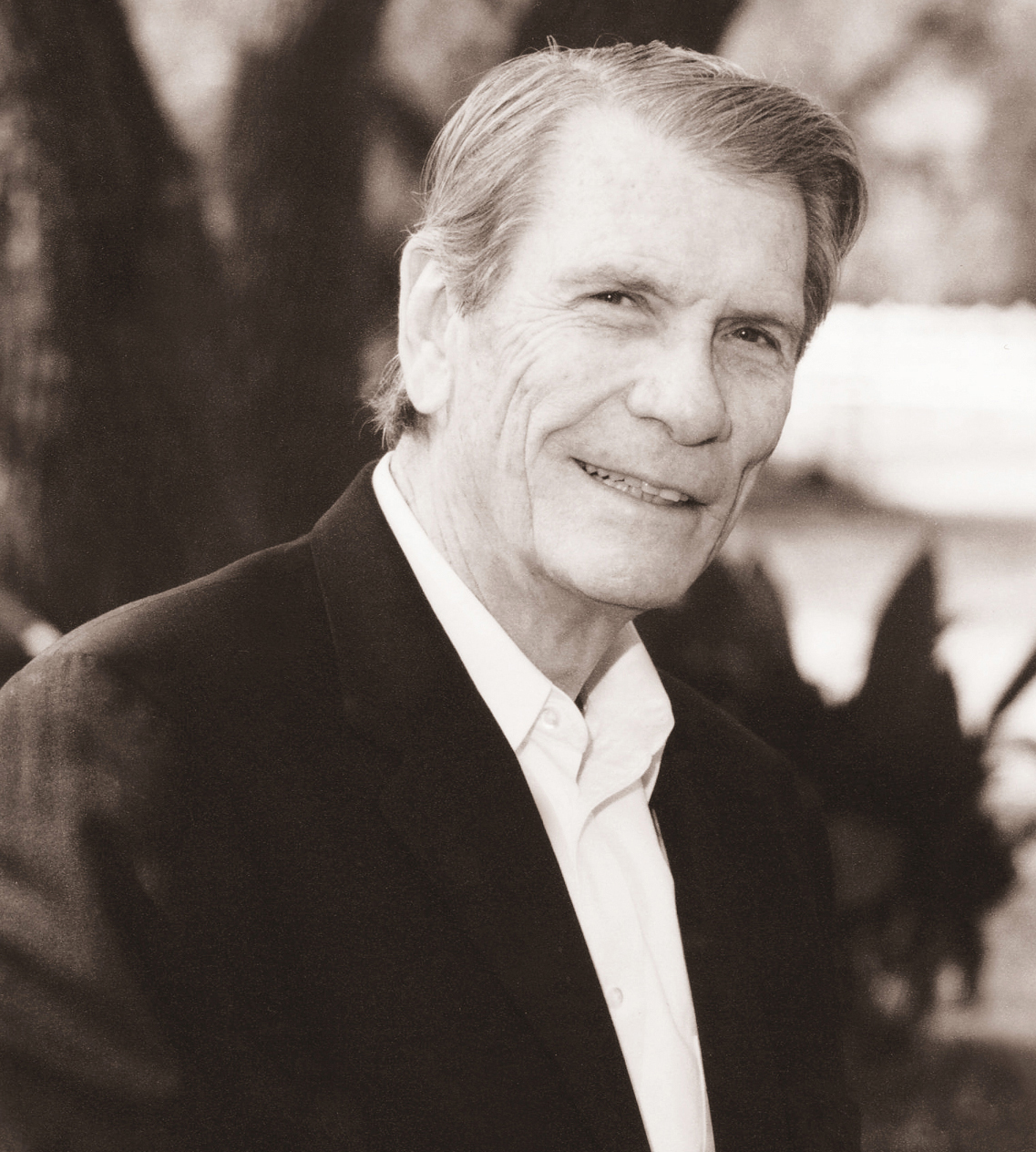
A Legend has Passed: Dr. Paul Faulkner

As we age, it is more than natural that those who have been older than us have aged as well. It is still surprising if not shocking to the system when someone we have held with love and respect passes. That has happened to Charla and me. 

We learned yesterday that Dr. Paul Faulkner had died at the age of 92. We knew he was in ill health and that he suffered from several maladies. It still has caused us to pause and think and reflect upon his influence on us. 

So, I shall share a few stories and observations. 

In 1972, eons ago, when I was graduating from Lubbock Christian College, I applied for graduate school at then Abilene Christian College. We had an apartment near campus and a scholarship and all looked good to go. Then, a recruiter from Harding Graduate School of Religion, now Harding School of Theology, Memphis, Tennessee, was on campus at LCC. On a lark, we decided to apply at Harding and we got a larger scholarship and Charla got a job working in the library, so we decided to go there. 

In the fall of my first year on campus, I was part time youth minister at the Highland Church of Christ, and we met up with Dr. Faulkner at a youth rally one Saturday in Nashville. He asked, "Where have you been? You were going to be my graduate assistant." We had a pleasant conversation and that was it. 

That was it until the Spring, 1984. 

We had been at Ohio Valley College since 1982. Between 1972 and 1984 we had been in El Paso, back to Memphis, attended Ole Miss part time, and was now "Waymon R. Hinson, Ph.D." We had given birth to two boys back in 1978 and 1981, and we knew that it was time to move on from the Ohio Valley. 

I was home with a brutal case of mononucleosis which had ravaged campus that year. Mine seemed to linger longer than that of others. I was in bed, reading a copy of the Journal of Marital and Family Therapy, when Charla called out, "This is Tom Milholland on the phone. Do you want to talk to him?" Of course, I did. I knew that he was on faculty with Dr. Faulkner in the MFT program, then called the MFI, at ACU. 

To make a long story short, we interviewed at Lubbock Christian College and at a church in San Antonio, but ACU seemed to be calling the head and the heart. 

We went to interview at ACU with a spirit of hopefulness despite the lingering effects of mono and the fatigue of interviewing at three places in a week. Paul and Tom were engaging and inviting and we had good BBQ at Harold's. I knew I was not the number one choice, but when that guy said no, that he'd stay where he was, I was invited to become the third member of the full time faculty at ACU in the MFI. 

It struck me then as it strikes me now. In 1972 I could have been his graduate assistant, and then in 1984, he chose me to be on the MFI faculty along with him and Tom. I'd like to think that those 12 years prepared me for the next 24 and beyond. 

Paul was a dreamer, it seemed to me, and Tom and I were the boots on the ground. 
For instance, he permitted me to develop three new courses for the MFT curriculum. While they had to go through various channels of the graduate school and all, he encouraged that kind of creativity. Certainly Tom had his voice in things as something like chief academic officer, or whatever his unofficial title was. Those three: Addictive Disorders, Marital/Family Assessment, and Integration of Psychology and Theology. Later came Family Therapy Across the Life Cycle, but I think that was when Tom was program director. 

So, I was grateful for his trust in me as a new faculty member, and no doubt, he saw the value in those new courses and what they would bring to the students and their careers. 

Paul was a competitor both on the athletic field and court and in other places. His competitive spirit made me want to do better. Early on in my time on the ACU/MFT faculty, he was giving me an evaluation at the end, if I remember correctly, of a semester. He said at one point, "When we hired you, I expected you to do about a B or B+ with us, but you are giving us an A- or an A." Those encouraging words, spoken truthfully, I think, looking back, inspired me to do well in the classroom and in other phases of life in the academy. 

I remember only playing tennis with Paul and his lifelong tennis partner, Bill Wright, on one occasion. I don't remember who the fourth was, maybe it was Tom or maybe it was our mutual friend, Cecil Eager. When Paul was serving to me, I quickly realized that I was out of my league. If I crept in close, he'd hammer a flat serve by me, and if I moved back, he'd slice one out of my reach. I just kept up with the running thing. 

He was a skilled administrator. He knew when to do something. He knew when to delegate. He initiated the program becoming COAMFTE-accredited. Tom kept it after Paul retired,, and I kept it going after Tom moved into administration. 

As a group of three faculty, we wanted our students to learn the content of our courses and to learn the skills of marriage and family therapy. Each one of us, Paul, Tom, and I, had different specialties within the discipline of MFT. He was a reader and a thinker, and he pulled in great speakers for workshops that expanded our horizons as faculty and as students. 

He also encouraged political involvement. He had been actively involved with TAMFT, as was Tom, and Paul encouraged me as well. So, off I went to become chair of the ethics committee, chair of the strategic planning committee, and ultimately to become member of the TAMFT board, and then later to follow Tom as chair of the MFT licensing board. The point? Those things would have been much more difficult were it not for Paul's encouragement. 

He also encouraged all of us, himself as well as Tom and me, to present at conferences. The three of us had different interests and foci, so off we all went to state, regional, national, and international conferences. Those continued to put the MFT program at ACU on the map as a good place to study marriage and family therapy. 

Paul valued collegiality. On one occasion, when I had finished licensure requirements for the psychology license, just a few months after moving to ACU and Abilene, he and his wife, Gladys, held a reception for the MFT and the psychology faculty at ACU. During those days there was something of a rivalry between the two departments, and he wanted there to be more collegiality. He and the chair of the psychology department were friends, and he, I think, wanted that friendship to continue up and down both faculties. 

He was a commanding presence, a tall, athletic man, with a deep, countrified voice and vocabulary, and he was fierce on the tennis court. He had a laugh that was engaging. 

He recognized his foibles. One of which was his inability to remember names. Humorously, he, at times, depended upon Charla to connect for him events and names. Charla was good with names, so Paul asked her on several occasions both in person and on the phone to help him with a name. Another story that we laughed about off and on during those years was about me and his challenges with names. At our first meeting, he passed out an agenda. In the margin of the agenda, he wrote in his own hand, "Waymon do this, "Wayne do that," "Waymon," and "Wayne." I wondered if Paul had hired two new faculty. No, it was just Paul and my strange name. 

When Paul retired and turned the leadership of the program over to Tom Milholland, Tom and I both realized that we were standing on the shoulders of a giant of a man. We knew that we were drinking from wells that we did not dig. For years, Paul's portrait was hanging on the wall there in the clinic adjacent to the offices. It was a wonderful capture of the man. Looking off in the distance, pondering some noble idea or possibility. 

There are many of us who can tell Paul Faulkner stories, whether at ACU or Resources for Living or the ministry network or church in the Hill Country or the marriage and family workshops that he did around the world with his good friend, Carl Brecheen. 

It is stories, and the mentioning of a name that keep the person alive within. I plan to speak his name often because in more ways than I can count, my career was dependent upon him. Those 24 years on the ACU campus would not have happened without him, and so many other things along with those years. 

So, today, I am both glad and sad at the passing of Dr. Faulkner. Sad that he is no longer with us, but glad that he lived his life well and that so many will miss him and speak of him often, all while he is living in Glory with his beloved, Gladys. 


Tuesday, July 5, 2022

Let Justice Ring: America the Wounded

Let Justice Ring: America the Wounded: Oh, beautiful for spacious skies Except for the ones filled with our childrens’ cries. This land is your land, this land is my land ...

Thursday, June 30, 2022

Single-Issue Voting and Pejorative Speech

Perhaps you have seen the topic during this election cycle. It is a title frequently used by those on the right to attack those on the left when all else fails. And, it is the case, that many here in America are "single issue voters" and that the one single issue that is at the top is abortion. Perhaps you have verbally critiqued someone for voting for a party that "stands for killing babies." Or, perhaps you have been verbally critiqued as such. 

Why does this question even matter? For some it does, and for some it doesn't. For me it matters because in church circles, we hear the rhetoric, "I could never vote for him/her because of his/her stand on abortion." And many times, it seems that the conversation and decision are not around getting that candidate's position but on that candidate's party affiliation. Here is an illustration of that: "I will support anyone who is AGAINST killing babies. If you choose to support those who are killing them, there will come a day when you will have to answer for that. Aren't you glad your mother didn't decide to kill you?" A vote for Biden is a vote for abortion. 

Back when I was a younger man, a staunch Republican, I wrote an article for a Christian magazine under a pseudonym. It was pretty outrageous. I'd studied what happened in abortions, so I pieced things together and wrote an article as if I were the young woman in a first person sort of way. One woman who worked with us in the youth ministry was offended that I'd do that. It was descriptive insofar as I could tell at that time. However, it was before I actually knew women who wrestled deeply with this issue. I am somewhat chagrined that I ever wrote that, but it was a reflection of then and not now. However, the article was well received by our conservative readership, as I recall. 

Now the shoe is on the other foot, so I hear things about people like me. "Oh, so you are a  Democrat, so that must mean that you favor abortion," "you are a member of that baby killing party," "or your party pushed the Roe v. Wade decision," or any number of things along those lines. 

In this bifurcated world in which we live, some of us have a hard time stepping out of our binary thinking. Say that again? Some of us see the world only in yes/no, black/white, either/or ways. 

This issue is fraught with many a pot hole. At the end of the day, I want to be true to my theological foundations, to the God who made us all, and to the worthiness of people all around us. People matter. I think our tables are too small, too short, too narrow. After all, it is Jesus who does the inviting and we are the ones who encourage folk to sit beside us. We are all image-bearers. We all mess up. We are all messed up people. We are all standing in the need of grace and mercy. 

So, for the record, I am pro-choice and generally anti-abortion. I also believe that the decision is between that woman and her God, not made by a bunch of men in suits and ties sitting in some chamber somewhere. I want there to be fewer and fewer abortions. I want support for pregnant mothers to be a high priority in our country. 

On the other hand, my opinion, strongly stated here is that my friends and family on the right are "pro-birth." Yes, I said it, "pro-birth." Generally speaking, my friends and family on the right are more concerned about getting the baby born than keeping the baby alive, fed, nurtured, educated. Look at our programs by party. I think we should be pro-life from conception to the grave, and that means lowering the incarceration rate and doing away with capital punishment. While that is another complicated topic, there are too many innocent people being executed. We can do better. 

I worked in the arena of providing therapy, teaching therapy, and supervising therapists both pre-graduation and post-graduation for licensure for years. Across all of those categories I have seen women, young and older, wrestle with whether or not to have an abortion. I have seen the father of the child included as well as excluded from the discussions. I have seen families of the pregnant woman included and excluded from the discussions. At most of those points of discussion, the consequences were deeply considered, and pored over thoughtfully and painstakingly. I agonized with them. My job was not to be king of the universe and make decisions for them, but to walk alongside them and ask the deliberate hard questions before and after, when they had abortions and when they carried the baby to term. In other words, it was my decision to make this challenging problem their issue and not mine to control. Nobody died and made me king of the universe to control people and their decisions. My decision was to be inclusive and to walk with them, to agonize with them. 

Here are a few things for your consideration. 

Abortion rates are going down. They have gone down fairly consistently since Roe v. Wade. In 2019, one source found the abortion rate to be its lowest since Roe v. Wade. Apparently fewer women are getting pregnant. This is a complex issue, and thank goodness for google. Another good source for stats in this area is the Guttmacher Institute. Check out this and other sources. 

There are some who insist that abortions are lower in administrations with Democratic presidents. Although this is, again, a complicated issue, here is one source that looks at all sides of things. Generally, in my opinion, abortions trend downward in Democratic administrations due to programs and services for the women. Here is one source that supports this notion. It uses CDC data and provides summaries. 

Across America, there is a wide mixture of opinions about these matters. Per a recent Gallup poll survey, 79% of Americans say that abortions should remain legal or legal under conditions. Only 20% said not at all. A 2019 Pew Research Center survey indicated that 70% of Americans do not want Roe v. Wade overturned while 28% wanted it overturned. 

Another Gallup Poll found that 48% of us identify as pro-choice, 40% of us as pro-life, and no opinion at 6%. 

A curiosity is that some people think that attitudes toward abortion are party-affiliated. This survey found that not to be true. There are some Republicans who are pro-choice and there are some Democrats who are pro-life. 

One of the commitments of the Republican party has been to get a president elected and to have that president appoint conservative judges so as to overturn Roe v. Wade. Now that the current president has stacked the courts with his appointees with the help of a Republican leader of the Senate who blocked nominations of all sorts under Obama, our Supreme Court does have a 6-3 majority leaning conservative. Does that mean that they will take up the Roe v. Wade issue the way Focus on the Family and others have wanted it to since the 1970s? Who knows? Maybe so. But if that does happen and if they do overturn Roe v. Wade, then the issue reverts to the states and state laws. Those state laws are pretty diverse and pretty complicated. This paragraph is obviously dated as I wrote this back before the SCOTUS actually overturned Roe v. Wade. I decided to leave it here for the sake of providing a context for my current thinking. 

So, bottom line, if you want there to be fewer abortions in America, support programs that prevent pregnancies, and in my opinion "abstinence only" is not an effective strategy. I think it should be abstinence plus. 

Opt out of generalizations that do no good. Your party, whichever party it is, has members who are on both sides of this issue. There are believers in your churches on both sides of this issue. Develop a theology that is well thought out and articulated that engages people rather than shames people. 

Bottom line for me? I can no longer be a single-issue voter. Life is too complicated. If you are going to vote single-issue, at least choose a candidate who has been in line with that point for years, and not just of late out of convenience and gaining votes. Make sure that their lives line up with what they are now saying. Too much is riding on that these days. 

And now that the Supreme Court has ruled that the Constitution says nothing about abortion, they have essentially toss the issue back to the states. States, many of them, have had "trigger laws" on the books such that when the SCOTUS makes a ruling, like in the case of abortion, the law becomes immediately effective. Some of my friends vote in line with that way of thinking. Some of my friends vote the opposite. Some of my friends are divided about the issue, but choose not to be a single issue voter. Some of my friends will support the woman in her decision-making much as I described above. 

People in leadership roles in our community will attempt to make this a simple issue. They are wrong. They are seriously wrong.  

Monday, June 27, 2022

If I Had Been Asked

I recently asked friends and acquaintances what their church did or said about Juneteenth. It was a great time to say something as Juneteenth actually occurred on a Sunday, which is the good news, and it also appeared on Father’s Day, the bad news. So, in most instances, in all probability, Father’s Day won out over Juneteenth, or at least so it appears.

While most of my friends did not respond to my query, either because they didn’t see it, didn’t care to respond, or had nothing to add. The range was curious, nothing said at all to an entire worship service devoted to it. That would be my church on the one end and the National Washington Cathedral on the other end. In between were casual mentions, or a few seconds here or there, sometimes tied in with Father’s Day, and sometimes there were actually more time devoted. One I really like was a white pastor talking to a Black youth pastor. The white pastor acknowledged with an apology that he’d only known about Juneteenth for a couple of years. The young Black youth pastor offered grace and answered a few questions about its origins and how his family and others celebrated it. The elder of one church in an opening comments and prayer said several things for several minutes, and then one preaching minister devoted four minutes to it.

I’m curious as to who knows about Juneteenth and who doesn’t. A recent Gallup poll shows that the knowledge about it among American citizens has gone up since 2021. That is a good thing.

I suspect that largely white churches, mirroring white American citizens, will not know about it, and maybe won’t even think about it. I also suspect that muti-racial churches will know about it and will do something about it, or say something about it, in a way to honor the day and its meaning. I could be terribly wrong.

Personally, I have known about Juneteenth since the days of my adolescence here in Texas. I don’t know exactly when, but I remember knowing about it for a long time. Juneteenth became a Texas holiday in 1979 and now a national holiday as of 2021 when President Biden signed it into law and it immediately became a national holiday.

If I had been asked to say a few words at my church, what would I have said. I’ve thought long and hard about it and it would read like this:

“Today I am honored to say a few words on behalf of our country’s latest national holiday. It is a day unlike any other as its symbolism and meaning run deep, first for our African American citizens and hopefully now for all citizens. I take these few moments solemnly as my words will not come close to providing the deeper meaning and texture of this beautiful day.

On January 1, 1863, Lincoln signed into law the Emancipation Proclamation. We think it was bigger than it was. Perhaps it was more symbolical, but yet it freed some 500,000 of 3.9 million enslaved Africans, most of whom were living in the Confederate states. Unless Union soldiers were there, they remained enslaved. General Lee surrendered to General Grant at Appomattox on April 9, 1865. The war was over, the enslaved were free, and some did take their freedom.

On June 19, 1865, two and a half months later, General Granger and some 6,000 troops, many of whom were Black, landed at Galveston and made the declaration that the enslaved were free, but they were encouraged to stay and work for wages. Some did and many left immediately to seek their families. The 13th amendment was signed into law on December 6, 1865 which outlawed slavery except for prescribed circumstances.

Who of us can imagine what it was like to be enslaved to an enslaver on a large plantation or on a small plantation, with brutal means of keeping the enslaved Africans in check or less brutal ways of controlling them? Either way, who can imagine being owned as property? Who of us can imagine knowing that the Emancipation Proclamation had been signed, but the enslavers kept it quiet?  Then, who can grasp enslavement in Texas, having been quickly moved from another southern state into Texas, and the enslavers wanting at least one more harvest season and money from their labors. Who can truly grasp? Perhaps many knew about the end of the war and the enslaved now going free. It would be hard to keep that quiet, even as far away as Texas.

Who can grasp the depth of the joys of freedom? Waking up a free person must have been beyond belief. Living the day as a free person versus living a day as an owned person must have gone beyond comprehension.

Then, who can grasp living under the Black Codes, share cropping, Jim Crow South, and even the separate but unequal school system and other things?

So, yes, Juneteenth set the captives free. The enslaved ones were now free from the shackles of bondage and the brutal hand of men and women enslavers.

That was a day of celebration. Juneteenth has been celebrated from June 19, 1865 to this very day with all of its rich symbolism and meaning.

You and me, as white Americans, perhaps even some of us falling into that category of “I don’t really know much about it,” can now celebrate it. We celebrate it because people we care about are celebrating it.

Now, we may be invited to attend community or family gatherings with food and music and games and conversation. Or, maybe we won’t be. We can celebrate and honor our friends by learning about all things from Africa, to the Middle Passage, to the slave block, to enslavement on some farm, to the second Middle Passage, to having our families split and torn asunder in a dozen different directions. We can read and listen to the stories of people finding their roots or buying a farm where their ancestors were once enslaved or learning more about the plight of the Black farmer here in America. We can learn more about the Black Tax, red lining and its effects, health disparities, and much more. We can explore Black contributions to our country, the contributions that Black music has made, Black artists, Black theology and James Cone and others, and more. 

We can learn and by learning, we can celebrate. We can celebrate and deeply respect the celebrations of liberty and freedom for those whose ancestors knew not freedom or came to know freedom on June 19, 1865.

America has come a long way, and in this grand experiment called democracy, we have a long way to go in order to make things truly equal for all of God’s children. May we continue what others have started and build a beautiful USA for all of us.”

Those are my words, friends. What would you say? 


Tuesday, May 31, 2022

Vilsack, White Farmers, Equity Commission, and Banks, What a Mess

A while back, in a blogpost on this blog, I lined out some pretty strong opinions about Secretary Tom Vilsack "slow-walking" processes such that white farmers will always be paid, but Black farmers will never find their debts cancelled as promised. 

Today, I'd like to add one more varible to the long list of dates and slow walking. The dates are set in stone from that previous post here. 

"1) March 3, 2021, Senator Warnock succeeds in getting his "Emergency Relief for Farmers of Color Act" passed. 

2) March 11, 2021, President Biden signs into law the American Rescue Plan Act of 2021. Within this package is section 1005 which allowed $4 Billion to be granted to farmers of color for debt relief of their direct loans. It also included section 1006 to the tune of $1.01 Billion for outreach, training, education, technical assistance, grants and loans, and other things related to minority farmers, or Socially Disadvantaged Farmers and Ranchers, a 2501 designation. The debt relief pack was shaped by Senator Warnock's legislation. 

3) The Miller v. Vilsack was filed in Texas on April 26, 2021. White farmers as a class are certified and the preliminary injunction signed by the judge. The white farmers claim reverse discrimination despite the fact that white farmers have received nearly all of the subsidies, coronavirus relief funds, and the funds from trump's failed war with China.

4) Faust etal v. Vilsack was filed on April 29, 2021 and the temporary restraining order granted on June 10, 2021. 

5) Winn v. Vilsack was filed on May 25, 2021. Defendants responded on June 4, a hearing was held June 16, and the judge issued the preliminary injunction on June 23, 2021."

Point is that Vilsack had more than enough time from the moment that President Biden signed the ARPA of 2021, and even before the ink dried, he could have had things in place. After all, the USDA does have computers, does it not? And it has records of every direct or guaranteed load and to whom, right? Yes, I thought so. 

On May 19, 2021, Alan Rappaport wrote an article in the New York Times entitled, "Banks Fight $4 Billion Debt Relief Plan For Black Farmers."  Rappaport surfaces a letter from three banking entitities to Vilsack telling him that to cancel the debts of Black farmers would costs them a lot of money. 

So, there we have it, Vilsack sauntering down the highway of life while our people die. While the white farmers file their racist and foolish lawsuits that stop debt cancellation, and the bankers associations lodge their complaints, Vilsack does nothing. 

And, he's still doing nothing for Black farmers but for white farmers and corporate farms, he's doing a lot. 

Another blog post on this page, I ventured out with my opinion about the Equity Commission and what it's all about. We told Biden that it was a bad idea. We told Vilsack and others that it was a bad idea. We said, to make a long story short, that there is a plethora of reports and commissions and we don't need another commission report. We have enough of them, and the document will be filed away or something like that, I told a reporter from Politico. In this specific blogpost, I address the conflict of interest and ethics violations, ones that USDA is saying that are not so, but me and my friends say is so. 

And now, to put all of these things together, we have it under good authority that Secretary of Agriculture Thomas Vilsack, President Biden's appointee for a third wasted term, is now doing an end run around congressional policies and law. 

In section 1006 of the American Rescue Plan Act of 2021, there is a $1B fund that is equally divided across four sub-items. Each category will receive $250M per our sources. The Equity Commission is paid out of #5 and that's another story. Vilsack is allegedly going to allocate those numbers across items in the way he wants, drop the total number of dollars or Socially Disadvantaged Farmers and Ranchers to $250K when the ARPA had the cap at $500K. And, item #5 for direct payments to farmers and ranchers will not be made now but will require applications and documentation for those funds. And, per one of my colleagues, "the use of funds for the other items will not save one Black farmer." 

Also, he is expanding the groups that will receive any sort of funding under section 1006. Once upon a time this was for Black farmers and then it got watered down to historically underserved farmers and now to a benefit pool of 80 per cent of all farmers and ranchers. 

Those details can get confusing. Let me say it this way, Thomas Vilsack is running USDA like a plantation and he is going to do what he damn well pleases unless we all reach out and stop him. 

Thomas Vilsack has no interest in doing right by Black farmers and other minority farmers. He is listening to his own white self and to the white interests of other farmers and ranchers and law suits. 

He needs to be removed from office immediately. 

Thursday, May 26, 2022

Let Justice Ring: America the Wounded

Let Justice Ring: America the Wounded: Oh, beautiful for spacious skies Except for the ones filled with our childrens’ cries. This land is your land, this land is my land ...

Wednesday, May 25, 2022

Thoughts and Prayers.........More Thoughts and Prayers.......Enough with Thoughts and Prayers

It is not lost on me that most people do not know what to do during times of brutality like Uvalde or Charleston or Buffalo. We see the carnage on the television or on our computers and we feel overwhelmed and stuck. We wring our hands and do not know what to do. We feel deep empathy of those who have lost their loved ones, or rather for those who have had the lives of their loved ones taken away in senseless acts of gun violence. 

So, I think it is the natural human response to say, "Our thoughts and prayers are with them." Even today, at the end of a telehealth consult for my vision, my provider said something to the effect of praying for someone who had just gotten out of the hospital. I'm not opposed to praying at all. I am, in fact, a keen fan of praying. I pray a lot, and I think and study about praying a lot, and, in fact, the Jesus who prayed often and in various settings is someone that I am studying these days. 

However, when I hear politicians offer their "thoughts and prayers," my immediate response is revulsion and my internal thoughts, you probably don't want to hear that internal dialogue or monlogue or whatever you want to call it. You and I both know that "thoughts and prayers" is a way of deflecting and postponing any meaningful discourse and/or change around things that matter to us. 

I get it that it takes time for things to change. That is coming from me, a guy who has been advocating for justice for Black farmers since 1994. No one has to tell me how slowly the wheels of justice roll and how along the way, those wheels grind good people into the very ground that they are living upon. 

But, then, on occasion there will come people like Senator Elizabeth Warren who offered her plan for justice for Black farmers, and then there are others like Senator Booker, Senator Warnock, or Senator Sanders, and Senator Stabenow, and others who offer up policies for change. Then, there are people like Secretary Thomas Vilsack who stands in the way of debt cancellation for Black farmers and it takes other activities of other entities in Washington to challenge him. 

So, when politicians on the right offer up "thoughts and prayers," then I watch what they do and where they go and what they say. When they comment about those on the left being guilty of politicizing tragedy, and then they do the same thing, my emotions boil over. Then, look at where they go to speak. In fact, look at the names of those who are on the speaking agenda for the NRA this weekend in Houston. After the murders in Uvalde, this meeting being held is tone deaf. 

No, they are not serious about creating change in America. Too many votes ride on it. To win in some elections, you have to be sold out to the NRA. The NRA would not be friendly to anyone who advocates for change on the American stage. 

One the other hand, I was proud to see our President stand up in the White House, not too many hours after he had returned from his overseas trip, and grieve over America and its children. While he may not be the Consoler in Chief nor sing Amazing Grace at a memorial service like President Obama, still he is a good man who knows grief and tragedy personally. 

Still, however, it is up to you and me to do something beyond wring our hands. We must vote. Vote for persons who see the gun crisis for what it is, a senseless crisis that kills our children and vulnerable adults. Vote for those people who see the issue as a growing public health crisis. Vote for them, and arm yourself with information about gun violence as a public health crisis.   Vote for those people who will take your agenda to Washington or to the statehouse in whatever state you live. 

If someone is serious about the gun crisis, they will suspend their loyalty to the NRA and to the heinous interpretation of the 2nd amendment and to all things guns. They will change policies about who can get what guns and how they can get them. No 18 year old needs two AR-15s. Deer do not wear kevlar on their bodies. If you can't kill a deer in one, maybe two shots, you need to do something else. 

There has been a feverish debate over the origins of the 2nd amendment for eons. Here's one history of it.  If you are willing to venture into new territory, I'd recommend Carolyn Anderson's work on the history of guns and the second amendment here. 

Either way, America loves its guns. Despite the carnage over the last few decades, we still maintain that owning is our right, and owning how much and how many and for what reasons are our rights. We love them, and our individual freedoms too much, and at times this at the expense of the most vulnerable. 

So, take your "thoughts and prayers" and put them into action. Vote for people who will carry your convictions that enough is enough, enough of our children and others have died, and, no, the NRA does not need to own our souls here in America. 

Let our thoughts and prayers be mobilized for action. Expect public policy to take a long time to develop and for it to be shaped into laws. It will never happen as long as we sit and wait and offer up our thoughts and prayers. 

And, on that note, this is a guy who has it right. He said it well. I can't improve it. He says it well here. Click on his picture of all of the Uvalde children and then read his words. Well worth it. Posted here with his permission. 

Thoughts and prayers did not save the saints in Charleston, nor at the grocery store in Buffalo, nor the children at the schools in Uvalde or Sandy Hook, and they will not save us. 

Pray, preach, write, march, and vote. Work for change. Put your feet into it. Put your heart into it. Put your soul into it. Put your words into it. 

Do something. 

Do something. 

Just do something. 

The persons you help to save may be those you love.